
From User Feedback to The Benefit Ladder: 3 Practical Examples of Effective Product Design Research Methods
In today’s article, we’ll have a look at how to improve the quality of your product design specifications by incorporating three exercises: user feedback, the mountain feature, and the Benefits Ladder.
We’ll go through the importance and objectives of each of them and illustrate the outcome with examples from a project we are currently working on for Australian start-up Eloise, founded by Jeremy Liu. We aim to design Eloise to be a better pram that would address common frustrations parents face when using traditional strollers.
1. User Feedback
or how to Understand our Customer desires
Early on in the design process, businesses must gather feedback from users to enhance their products. User feedback offers valuable insights into customer needs, preferences, and pain points. Incorporating this feedback prior to start developing a concept help create products that meet user expectations.
User feedback come from various sources (more on this below). The collected feedback offers valuable information that can help you gain a thorough understanding of what your users really want.
The primary benefit of user feedback is its ability to highlight areas for improvement. When customers provide honest opinions about your product or service, they are essentially telling you what works well and what doesn't. This insight allows you to identify any pain points or usability issues that may be hindering the overall experience for users. By addressing these concerns, you can enhance the functionality and user-friendliness of your product.
Additionally, user feedback also helps in identifying new features or ideas that could be incorporated into the product. Customers often share their suggestions or wish lists through their feedback, which can give you innovative ideas for future updates and releases. This not only shows that you value their opinions but also creates a sense of ownership among users towards the product.
One of the main reasons why incorporating user feedback early on in the design process is because it allows designers to gain valuable insights into how their target audience perceives and interacts with their products.
By collecting feedback from users through surveys, beta testing, or customer reviews, we, designers can understand what works well in their products and what needs improvement. This information can then be used to make necessary changes or adjustments in the design to enhance user experience.
When individuals feel like they have contributed to the development of a product, they are more likely to become loyal customers and advocates for that brand. This not only helps increase customer retention but also drives word-of-mouth marketing for the product.
Getting From feedback to feature wishlist
1. Collect Feedback
First thing first, collect data from multiple sources. You can set up online surveys (we like to use Pollfish ), read online reviews directly on your competitor's website, read social media comments, and direct communication with existing or potential customers. The more sources we draw feedback from, the more holistic our understanding of our audience's needs will be.

2. Map the Feedback
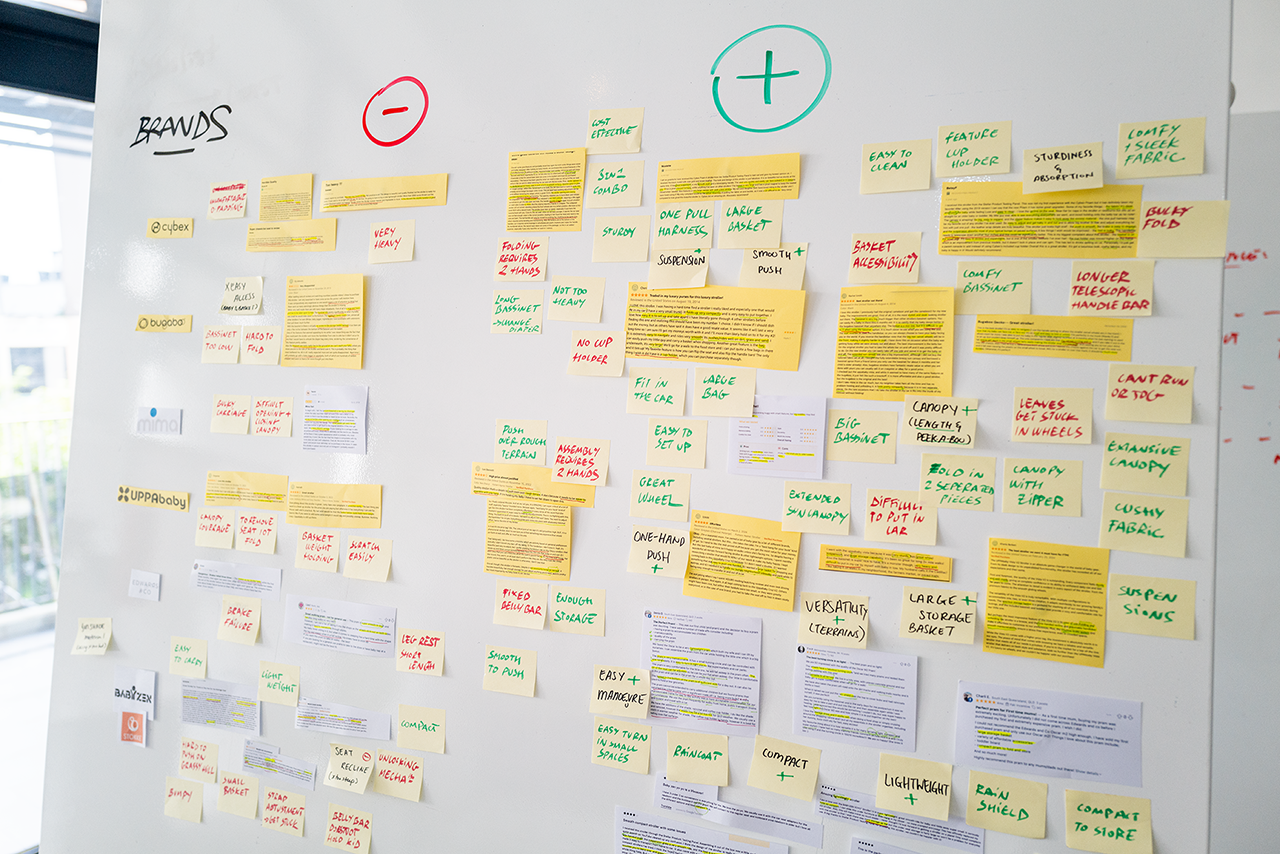
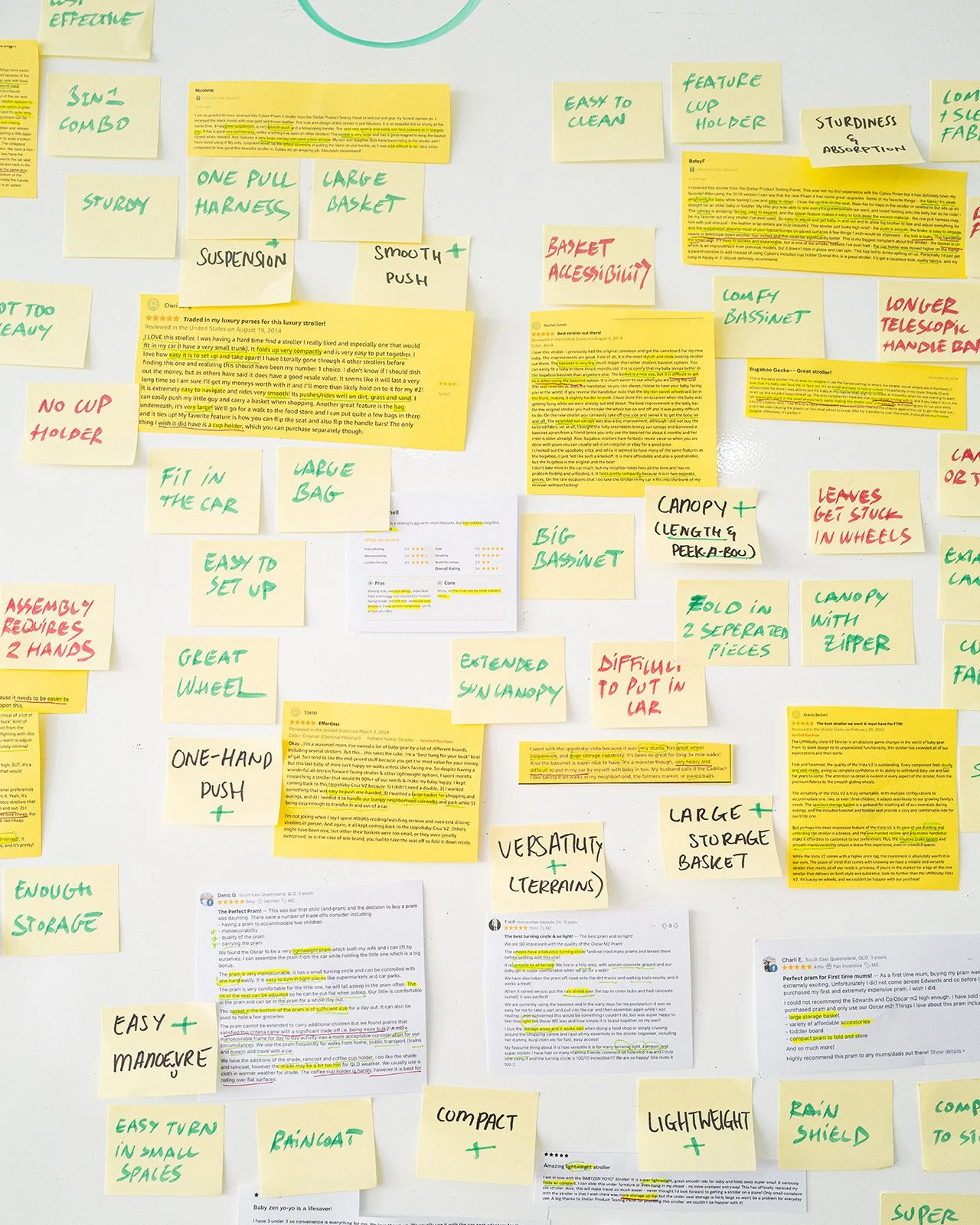
Print and examine your findings. For example, in the case of Eloise Pram, we specifically pointed out the negative and positive keywords, attributes, or sentiments expressed by customers in their online reviews. We organized this data according to competitors and whether the sentiments were negative or positive. We then turned all negative comments to the opposite desired outcome.

3. Analyze and Categorize
Once you have arranged your findings, analyze and categorize them based on common themes or issues. This will help you identify patterns and prioritize the areas that require immediate attention. In our case, we found a dozen of areas of concern, among them: weight of the pram, ease of folding, modularity, storage, terrain, canopy…
When categorizing various themes or issues, we frequently encounter redundancy. This redundancy serves as a positive indicator, revealing the significant topics that resonate with our users. Identifying and focusing on these areas of repetition is important as they highlight user preferences and areas of concern that require our attention. In our example above, the smoothness of the wheels or the storage capacity (or lack thereof) was prominent.
Understanding user feedback is important for product design research as it plays a vital role in identifying areas for improvement, generating fresh ideas, and offering a competitive edge to our product. By seamlessly incorporating user feedback into every stage of the design process, we pave the way for the creation of a product that not only meets but exceeds the expectations and requirements of our target audience.
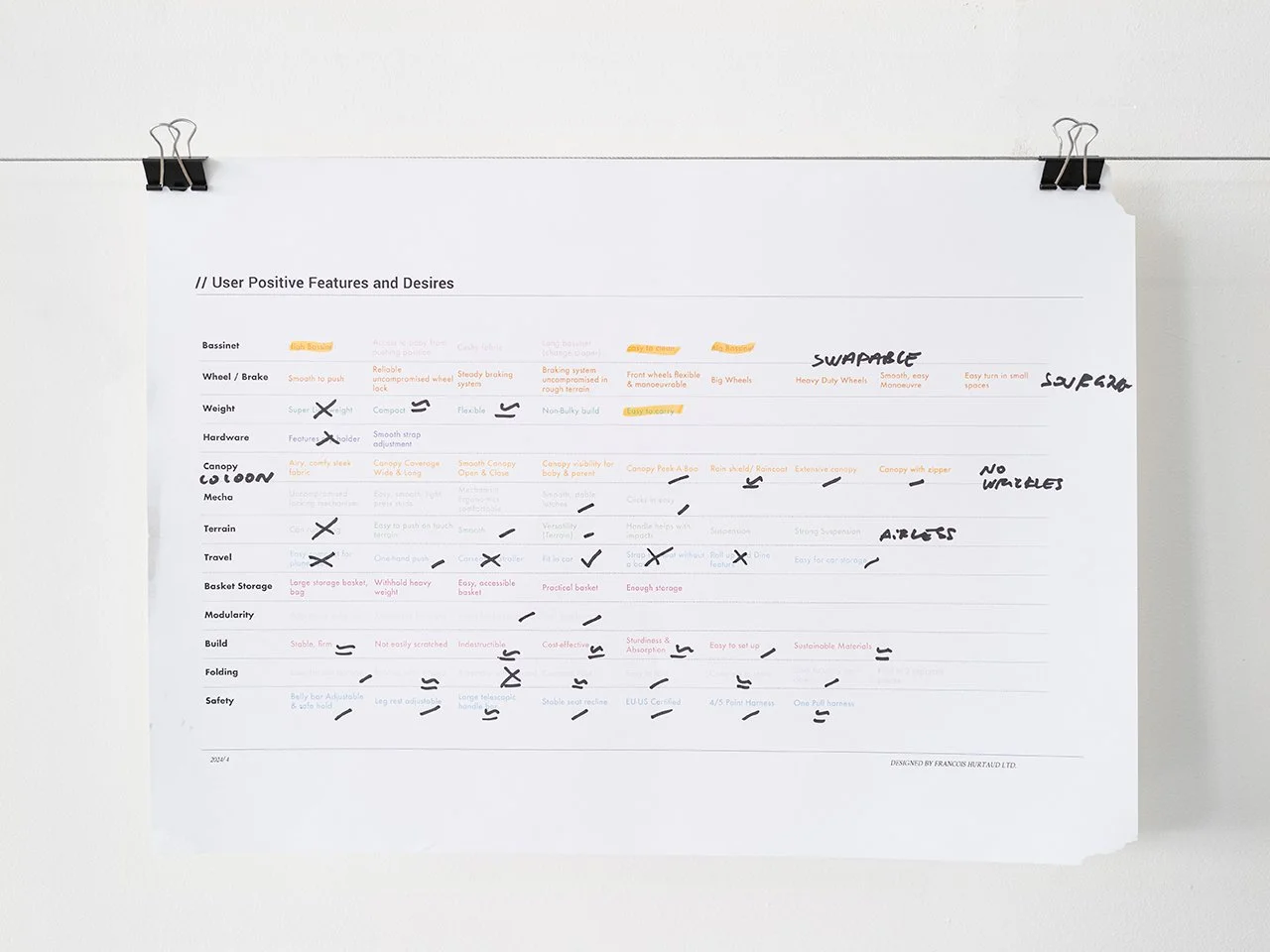
We now have an exhaustive list of features our audience desires. We have categorised them by area of concerns and gave them a color code. Next we will map those features and desires on the Featured Mountain.
2. The Featured Mountain
The Featured Mountain, késako?
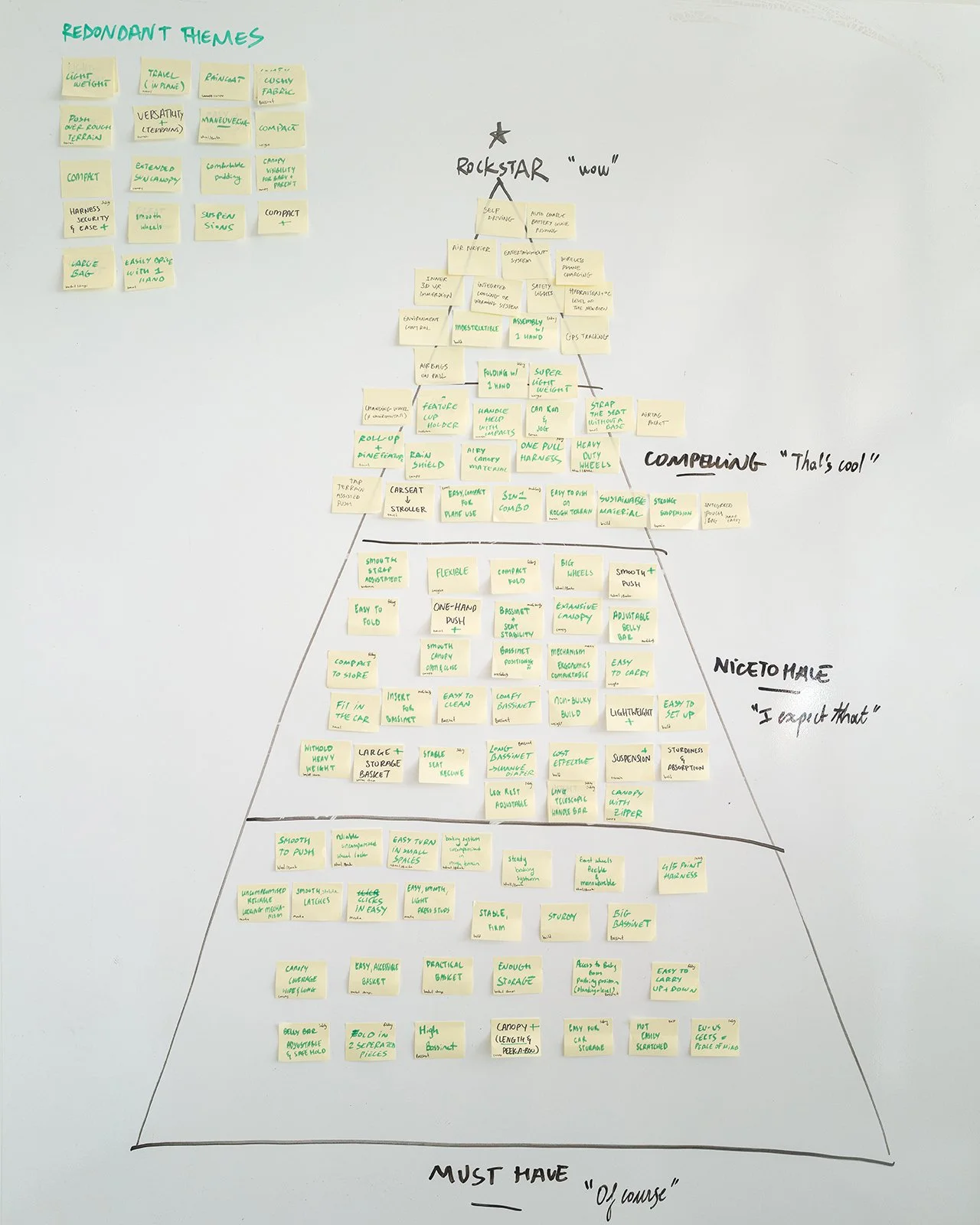
The Featured Mountain is a powerful tool that can be used in product design research to identify the most important and impactful features of a product, may it be digital or physical. It is a visual representation of user feedback, with each feature mapped on a mountain based on its frequency and importance.
The concept of Featured Mountain was first introduced by Alan Klement in his book "When Coffee and Kale Compete: Become Great at Making Products People Will Buy". It is inspired by Maslow's Hierarchy of Needs which categorizes human needs into four levels
Physiological
Safety, love/belonging
Esteem
Self-actualization
Similarly, Featured Mountain categorizes product features into four levels:
Basic needs: must-have features
Performance needs: nice-to-have features
Gratifying needs: compelling features
Delight needs: rockstar/magic features
Basic needs are the essential features that a product must have to fulfill its purpose. These are the minimum requirements for a user to consider using the product. For example, if we take a stroller as an example, basic needs would include wheels to ride, a canopy for hot or rainy weather and a folding system.
Performance needs are the features that make the product better than its competitors in fulfilling its purpose. These are what differentiate one product from another in terms of functionality or effectiveness. In our stroller example for Eloise for instance, performance needs could include interchangeable wheels, a washable canopy or a compact fold.
Gratifying needs are compelling features aiming to evoke a “That’s cool” response from our customers. Compelling features go beyond safety and basic needs, they bring a touch of comfort and convenience to the usage of the product. For the Eloise pram, we could think of incorporating practical features such as a convenient cup holder and additional adjustable components or an effortless one-handed pushing.
Delight needs are those features that go above and beyond users' expectations and bring joy or surprise to their experience with the product. They create an emotional connection with users and can lead to loyalty. Delightful features often align with customers' values or interests rather than just fulfilling their functional needs. In our pram example, this could include sustainable production or ease of reparability.
By mapping these different types of features onto Featured Mountain based on their frequency (how many users requested it) and importance (how much value it adds), we can gain insights into which areas they should focus on when making decisions about feature prioritization. The Featured Mountain can also help identify which features are "table stakes" and must be included in the product for it to be considered competitive, and which ones are truly differentiating and could give the product its USP (unique selling point).
The Featured Mountain is a valuable tool during market and design research to prioritize features that will have the most impact on customers. By understanding the different levels of users' needs, we can make more informed decisions about which features to invest their time and resources into, ultimately leading to a successful product that meets users' expectations.

How to Climb the Mountain?
First, not all features will be highlighted as part of the Featured Mountain, we prioritize them based on their impact on users' decision-making process. We focus on those that provide maximum value and align with our overall brand positioning or product development intention.
Then, always keeping user needs in mind, we take the feature wishlist that we extracted above from our user feedback and go one by one through all of them: we pick one feature a time and assess whether we deem it to be either a must-have (“Of course“), a nice-to-have (“I expect that feature“), or a compelling (“Oh, that’s cool“) or rockstar feature (“wow, never seen this before”).
We quickly find our mountain gradually filled from the base to the top as per priority levels. In each of the four segments, certain attributes that could contradict each other are expected. Consider a situation where a user wishes for a double-child accommodating pram, while another prefers a pram suitable for travel. Harmonizing these contrasting features or preferences proves challenging. The essential aspect to remember is that the Featured Mountain should not be regarded as a Product Design Specification; rather, it is a representation of an ideal product based on value importance.
When developing a first product, getting to market fast to taste the waters is the way to go. In that scenario, we would focus on addressing the fundamental requirements of the basic needs section “Must Have“ and highlighting a distinctive Rockstar element that sets our offering apart from competitors. The combination of the must-haves with a killer Rockstar feature is our minimum valuable product (MVP).

We have now completed an exhaustive Featured Moutain. This exercise helped us understand how we stand out from competitors and what sets our product apart. We can snap a photo of it before moving to another level of user feedback visualisation: the Benefit Ladder.
3. The Benefit Ladder

Getting to Customer Satisfaction
The Benefit Ladder is a powerful tool in product design that helps companies identify and prioritize the key benefits of their products.
It is a visual representation of the different levels of benefits that a product provides to its users, from basic features to emotional and aspirational benefits.
At the core of the Benefit Ladder lies the concept of customer satisfaction. The goal is to understand what truly drives customer satisfaction and use that knowledge to create a product that meets those needs.
By breaking down the various levels of benefits, companies can gain valuable insights into how their product can better serve their target audience.
Identify the basic, distilled features or functionality that your product offers. These are typically tangible elements such as size, shape, color, and technical specifications. This level focuses on fulfilling functional needs and addressing pain points for customers.
Next, we want to convert those dry features into their functional benefit. For Eloise Pram, a basic 5-point harness feature would translate into a safety functional benefit or a cup holder feature would translate into a convenient functional benefit.
Moving up the ladder, we come to more emotional or experiential benefits. These include things like comfort, ease of use, and aesthetic appeal. This level taps into customers' emotions and creates a positive association with the product. How the functional benefit from below make me feel?
On top of the ladder, we reach Aspirational benefits. Beyond these practical considerations lies a level of higher order. This level speaks to customers' desires and aspirations by offering them something they may not have even thought possible before or are physiologically seeking .
The final step in creating a Benefit Ladder is understanding how these different levels interact with each other. In our case, the insights that we extracted from the ladder is that when looking to purchase a pram, parents are aspired to seek intimacy with their kids, comfort for the baby (and for themselves), reassurance that their kids are safe which brings us to security and lasty a high degree of freedom and autonomy.
A successful product should offer all three benefit levels in harmony – an attractive design that fulfills practical needs while also offering aspirational value.
Implementing The Benefit Ladder allows companies to see beyond just what their product does but also why it matters to customers. By understanding these higher-level needs and desires, businesses can create more impactful products that resonate with their target audience on a deeper level.
The Benefit Ladder serves as an essential tool for unlocking valuable insights into customer satisfaction and driving successful product design developement. By breaking down benefits into different levels, businesses can better understand their customers' needs and create products that not only fulfill functional requirements but also evoke positive emotions and aspirations.

What’s next
How to incorporate
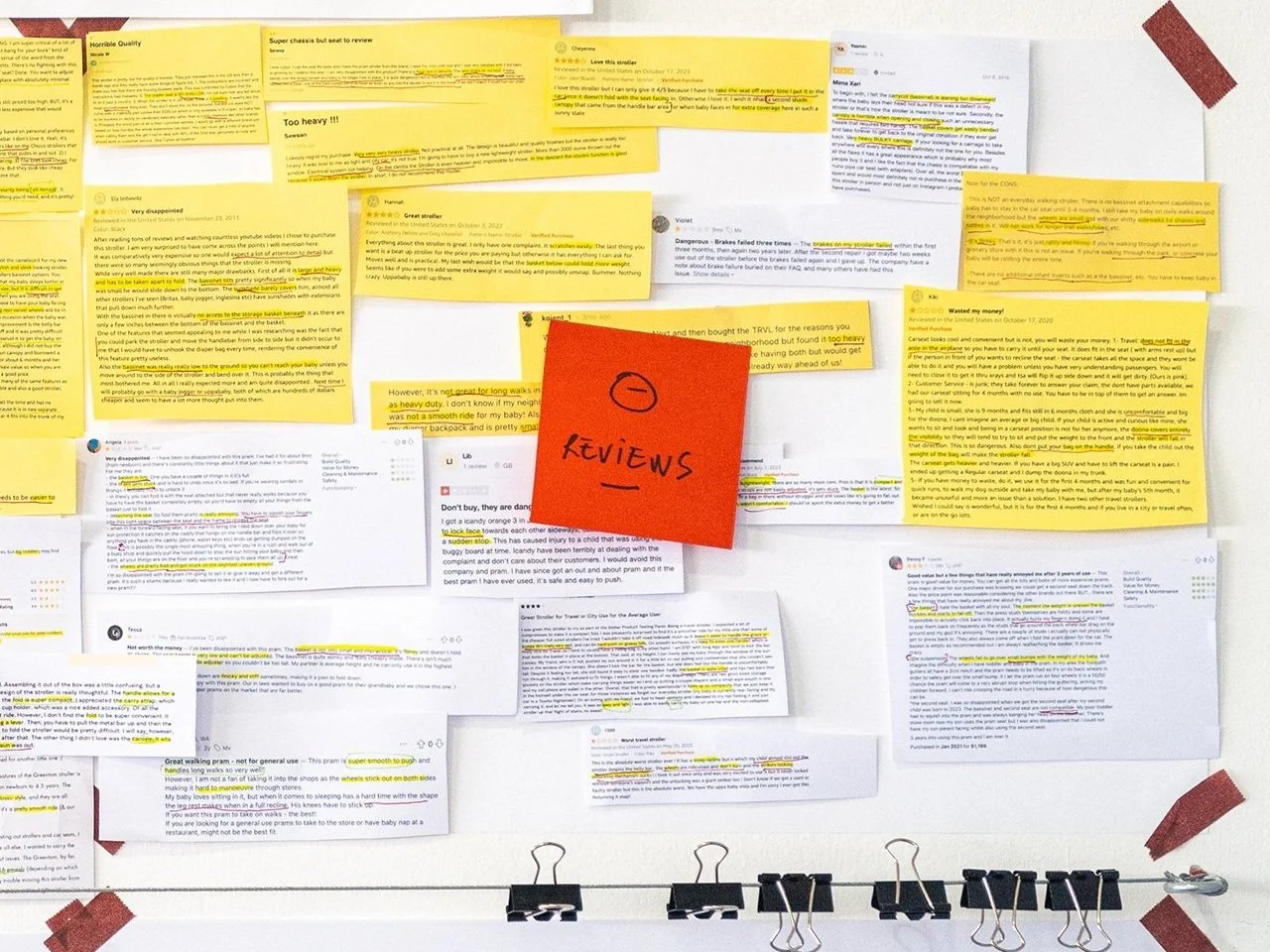
1. Gather User Feedback
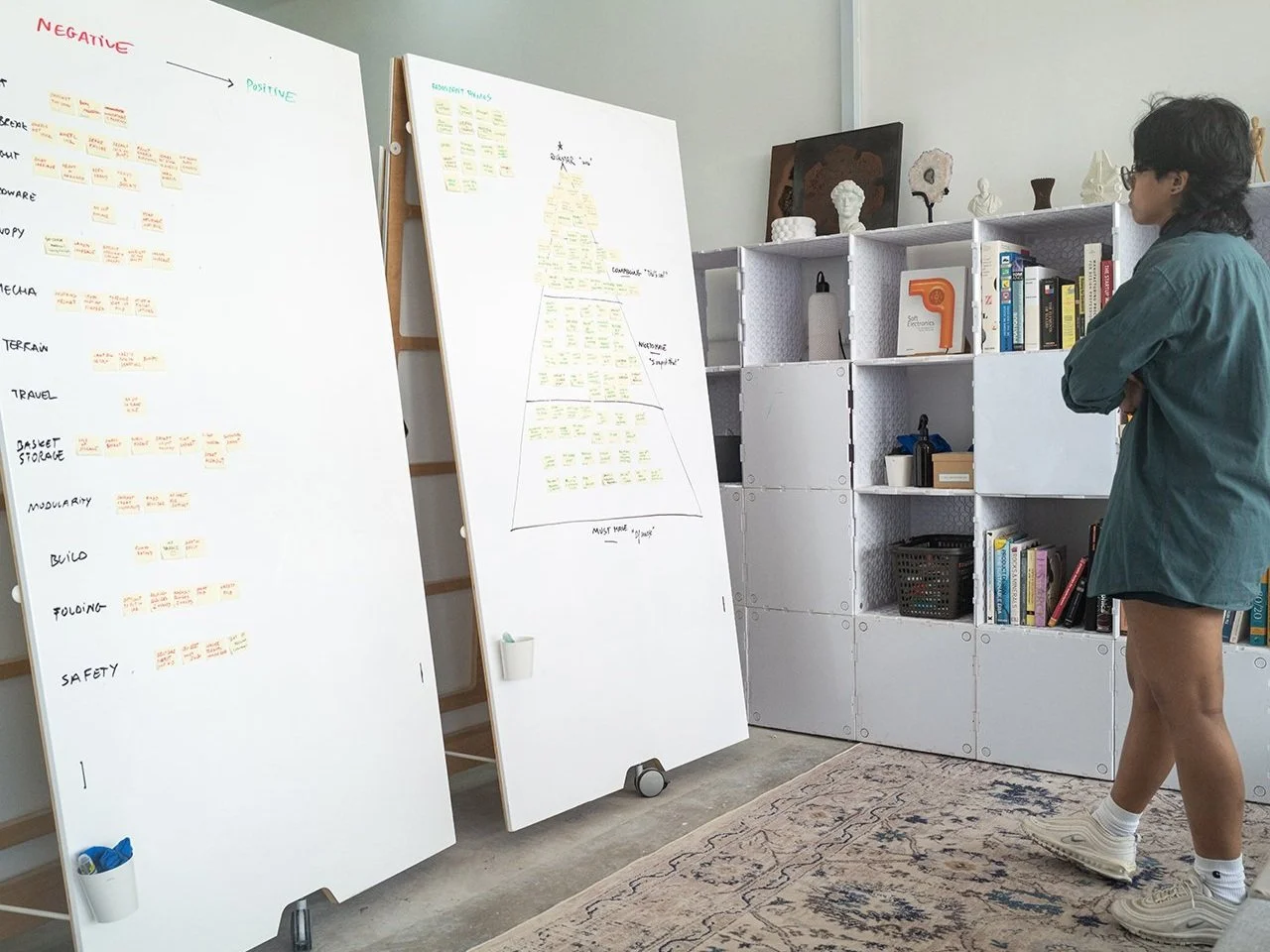
2. Map them by importance
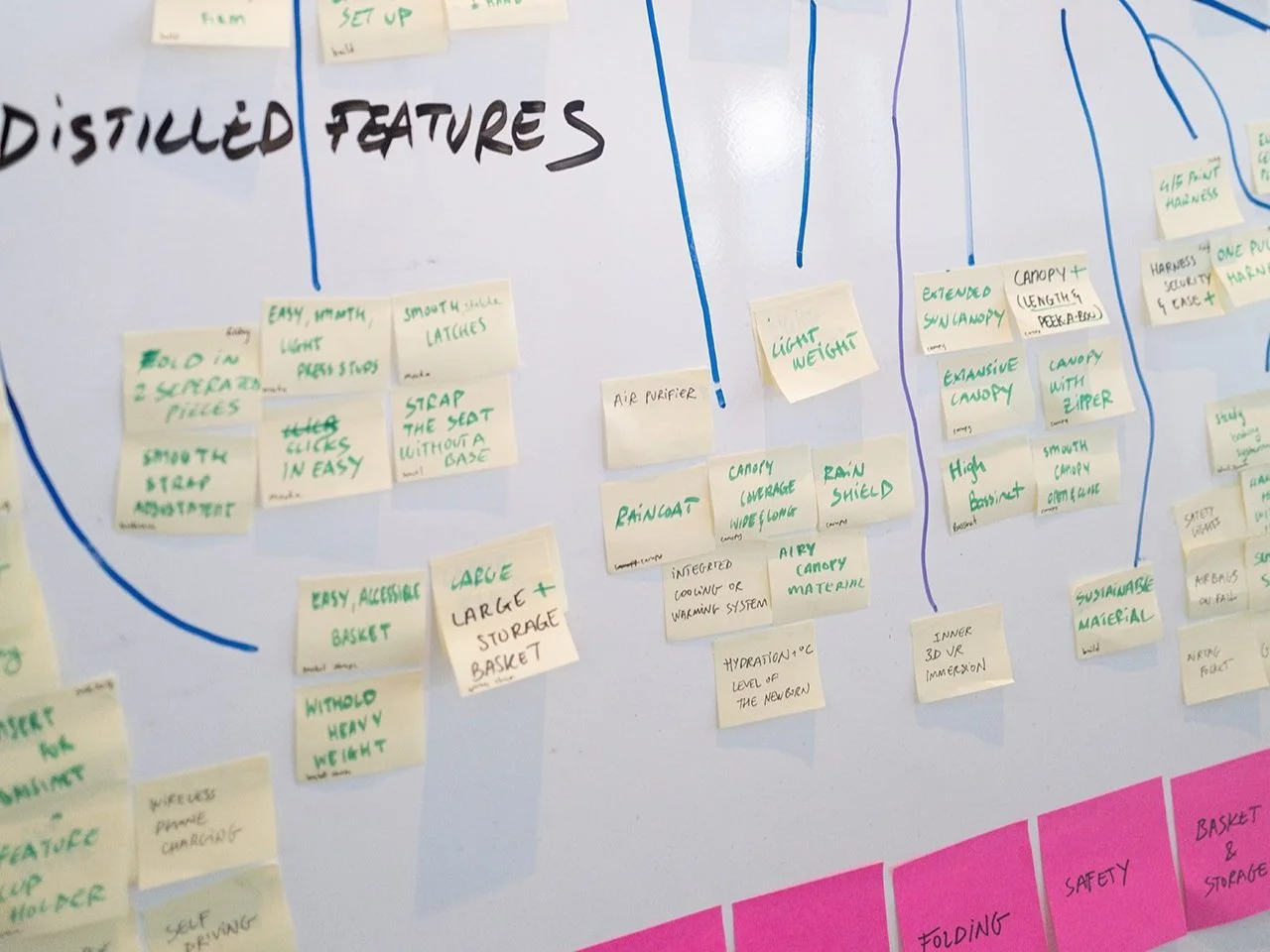
3.Translate them to higher order benefits
Incorporating user feedback, featured mountain, and the benefit ladder into your product design process can greatly enhance the success and effectiveness of your product outcome. These three elements work together to give you valuable insights into what your target audience wants and needs, as well as how to best communicate the benefits of your product. In a nutshell: